



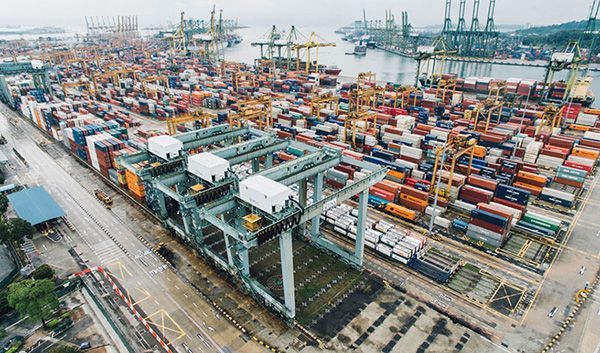

Your Guide to CBAM: Implications for EU importers and non-EU producers (12 January 2026)

Your Guide to CBAM: Implications for EU importers and non-EU producers (12 January 2026)
The EU’s Carbon Border Adjustment Mechanism (“CBAM”) has entered its definitive phase, fundamentally reshaping the regulatory framework governing imports of carbon-intensive goods into the European Union (“EU”). CBAM was established by
Regulation (EU) 2023/956 of the European Parliament and of the Council of 10 May 2023 establishing a carbon border adjustment mechanism (“Regulation (EU) 2023/956”) and constitutes a central pillar of the EU’s climate policy under the European Green Deal. Its objectives are to prevent carbon leakage, incentivise decarbonisation in third countries, and ensure fair competition with EU producers subject to the EU Emissions Trading System (“ETS”). Unless otherwise stated, all references to Articles and Annexes below are to Regulation (EU) 2023/956.
Timeline and recent simplifications
CBAM entered into force on 17 May 2023. There was a transitional period from 1 October 2023 until 31 December 2025 during which EU importer’s obligations were limited to reporting requirements. The definitive CBAM regime, under which financial obligations, including the purchase and surrender of CBAM certificates come into effect, applies from 1 January 2026 (Articles 32-35).
In October 2025, the EU adopted targeted amendments aimed at simplifying the implementation of CBAM. In particular, a single de minimis mass-based threshold of 50 tonnes of CBAM-covered goods per importer per calendar year was introduced. Importers below this threshold are exempt from CBAM obligations. However, this exemption does not apply to imports of electricity or hydrogen, which remain fully subject to CBAM regardless of volume (Article 2a).
Products covered and possible future expansion
CBAM currently applies to imports of goods listed in Annex I from six sectors namely:
- cement;
- iron and steel;
- aluminium;
- fertilisers;
- electricity; and
- hydrogen.
On 17 December 2025, the European Commission proposed an expansion of the list of goods subject to CBAM, to include approximately 180 specific steel- and aluminium-intensive downstream products, such as industrial supply-chain components used in heavy machinery, as well as certain household goods as from 2028. Additional anti-circumvention measures to enhance CBAM effectiveness were also proposed by the European Commission, including targeted additional reporting obligations and requirements to provide additional evidence where there is a high risk of abusive practices.
Key legal obligations
EU importers must:
- apply for and obtain the status of “authorised CBAM declarant” before importing CBAM-covered goods where:
- imports exceed 50 tonnes per calendar year; or
- any quantity of electricity or hydrogen is imported (Article 5).
Under certain conditions, an indirect customs representative may act as an authorised CBAM declarant for an EU importer and will be subject to the obligations under Regulation (EU) 2023/956 applicable to that EU importer:
- calculate and declare embedded greenhouse gas emissions. The first annual CBAM declaration must be submitted in 2027 for the calendar year 2026, and must be submitted by 30 September of each year for the preceding calendar year. (Articles 6 and 7) If applicable, the declared total embedded emissions must be verified by an accredited verifier (Article 8);
- maintain records of information required for the calculation of embedded emissions, including, if applicable, any reduction in the number of CBAM certificates claimed due to carbon price paid in a third country, for four years after the calendar year in which the CBAM declaration was submitted (Articles 7(5) and 9 and Annex V); and
- purchase and surrender CBAM certificates corresponding to declared emissions. EU Importers must surrender CBAM certificates via the CBAM registry by 30 September of each year, starting for the first time in 2027 for the year 2026. EU Member States will sell CBAM certificates through a common central platform as from 1 February 2027 (Articles 20 and 22).
Non-EU producers, whilst not directly subject to CBAM obligations, are essential to effective CBAM compliance in practice. They must calculate embedded emissions using EU-prescribed methodologies and provide accurate, complete and verifiable emissions data to EU importers.
Suggested actions for business operators
EU importers should:
- identify whether imported goods fall within Annex I and the relevant CN codes;
- determine whether imports exceed the 50-tonne threshold or involve electricity or hydrogen, triggering mandatory CBAM authorisation;
- apply for CBAM authorisation via the CBAM Registry (Article 5(3));
- engage suppliers early to secure CBAM-compliant and verifiable emissions data;
- establish internal processes for reporting, record-keeping, and financial planning relating to CBAM certificate costs; and
- closely monitor CBAM-related developments, including legislative amendments and any potential future extension of scope under Regulation (EU) 2023/956.
Non-EU producers should:
- identify EU-bound products within the CBAM scope;
- implement systems to measure and document embedded emissions in line with EU rules;
- ensure emissions data are verifiable; and
- assess decarbonisation measures to reduce CBAM exposure and maintain EU market access.
For more information on how CBAM could impact your business or economic operators in your country, please contact Yapa Thepkanjana at yapa.thepkanjana@acquislp.eu.